
To truly know a city, you need to observe it at two distinct moments: when everyone is talking about it — and when everyone begins to fall silent.
Istanbul closed 2025 with a record. According to the Turkish Statistical Institute, 1.68 million residential units changed hands last year — the highest sales volume ever recorded in the country's property market history. The media covered the euphoria extensively, analysts offered their commentary, and the industry celebrated.
The first data points of 2026 tell a different story: a visible slowdown in transaction volumes.
Yet to assume that Istanbul is defined solely by volume is to misread the city. Metropolises reveal their greatest opportunities not at their peaks, but at inflection points — where momentum shifts direction. This report examines precisely such a moment: the dynamics quietly taking shape behind the noise.
Misreading the Silence After the Record
Let us consider a thought experiment.
You walk into a concert hall. Before the musicians take the stage, the room is alive — conversations overlap, chairs scrape the floor, programmes rustle. Then the lights dim. The hall falls silent. And in that moment, you do not ask yourself: "Why has the music stopped?" Because you know the music is about to begin.
Viewed from the outside, Istanbul's property market in 2026 resembles that concert hall. Transaction volumes have fallen, deal flow has eased. Hasty commentary followed: "The market has cooled."
Look at prices, however, and a different picture emerges.
According to February 2026 data, residential property prices in Turkey rose 29.8% year-on-year in January 2026. In Istanbul, the average price per square metre reached TRY 60,391, with the average property value reaching TRY 6.8 million. Moreover, expert analyses suggest this growth is not merely nominal — in real, inflation-adjusted terms, it represents an increase of 5% to 8%.
Transactions fell. Prices rose.
This is not a contradiction. It is the clearest signal that the market is undergoing structural recalibration.
When the Buyer Profile Changes, Everything Changes
Understanding markets often requires looking at people before looking at numbers.
In 2025's record year, a particular crowd took centre stage: a broad buyer base with access to credit, benefitting from a low-interest-rate environment, many attempting to become homeowners for the first time. This cohort drove the market's volume growth.
In 2026, financing conditions tightened. Credit access became more restrictive. Much of that cohort stepped back.
Who remains?
The cash-backed investor — patient, selective, thinking in the long term. This profile does not compress prices; it gravitates toward quality assets.
As the market becomes more selective, a bifurcation becomes inevitable. Underqualified or mispriced assets sit and wait. Properties in the right location, to the right standard, attract fewer — but far more decisive — buyers. This is precisely what is unfolding across Istanbul today.
In Istanbul's luxury residential segment, this is the natural behaviour of a maturing market: the best assets continue to attract demand and appreciate in value, while weaker or overpriced properties take longer to sell and face negotiation.
In short, the market has not gone quiet. Its frequency has simply changed.
The Value of a Single Street in Istanbul
Those who truly know this city understand one thing well: in Istanbul, the distance between two addresses is sometimes measured not in metres, but in years.
Within the same city — even within the same district — the payback period on a residential investment can range from 12 years to 22–24 years. That gap does not stem from market conditions alone. It comes from the street itself, the building quality, the tenant profile, proximity to transport nodes, and the development potential permitted by zoning regulations.
There are 800 metres between Nişantaşı and Osmanbey. Yet those 800 metres create an entirely different world in terms of price per square metre, tenant profile, and resale velocity.
This is why, when making an investment decision in Istanbul, consulting a district map is the starting point — not the destination. Macro analysis takes you to the right city. Street-level analysis takes you to the right building. Without one, the other remains incomplete.
The New Language of Luxury: Ecosystems Are Now for Sale
A decade ago, defining a luxury residence was relatively straightforward. Generous square footage, a central location, a quality façade. That was sufficient.
Today, these criteria remain necessary — but they are no longer sufficient on their own.
According to current field data, luxury residential prices in Istanbul range from USD 10,000 to USD 17,903 per square metre. What accounts for that price gap within this range?
Social amenity count. Technology infrastructure. Operational quality. Management philosophy.
In projects offering 10 to 15 social facilities, price-per-square-metre figures consistently exceed those of standard developments by a considerable margin.
Buyers today are not simply purchasing an apartment. They are seeking a curated living environment — secure, thoughtfully planned, socially rich, and capable of meeting every need of daily life within its own boundaries. Luxury is no longer measured by the size of a property, but by the quality of life it delivers. And that quality, over time, converts directly into price per square metre.
The Bosphorus: The World's Most Singular Store of Value
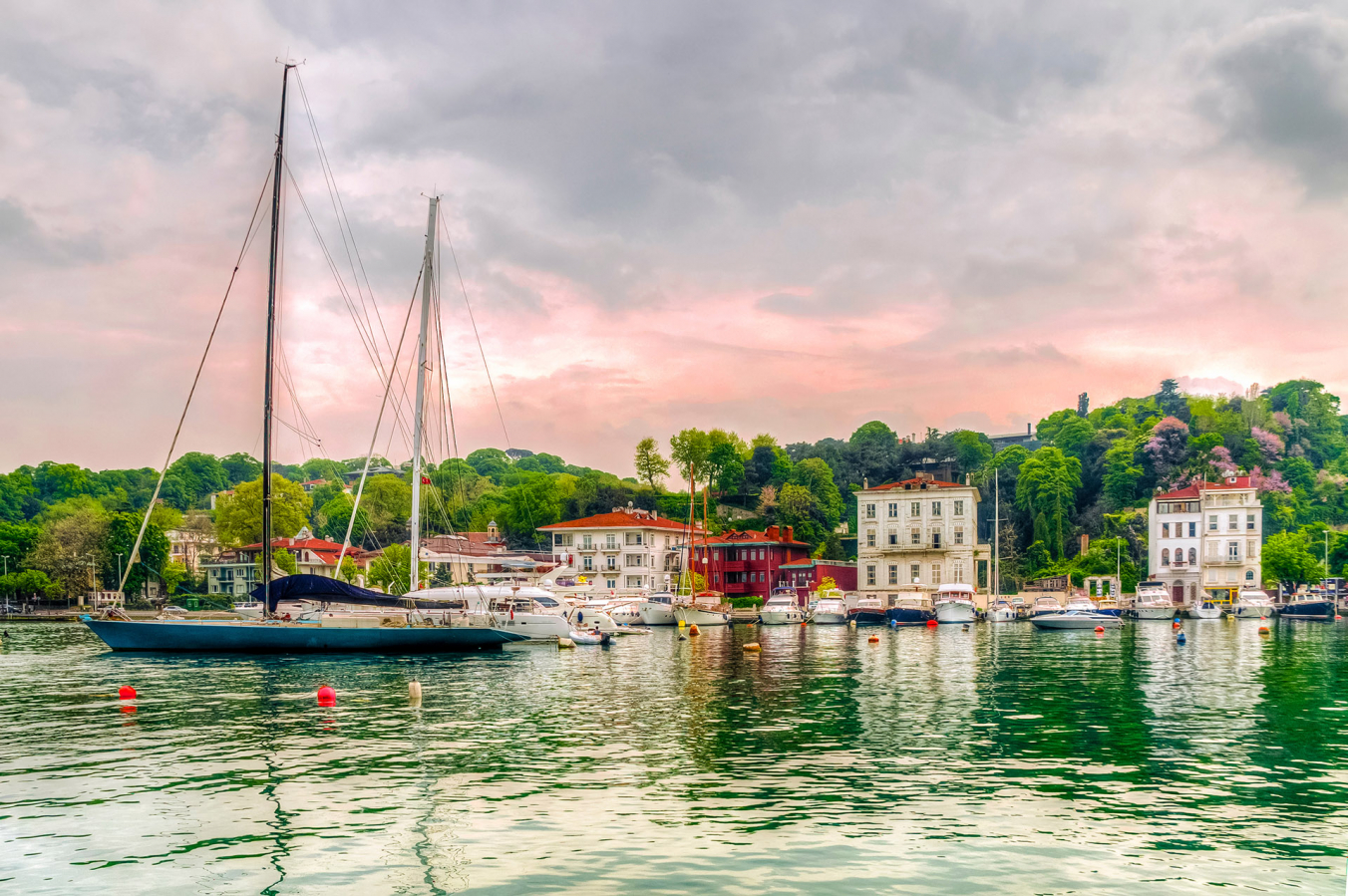
Certain places exist where prices, beyond a certain point, are no longer measured by logic — but by irreplaceability. The Bosphorus is one of them.
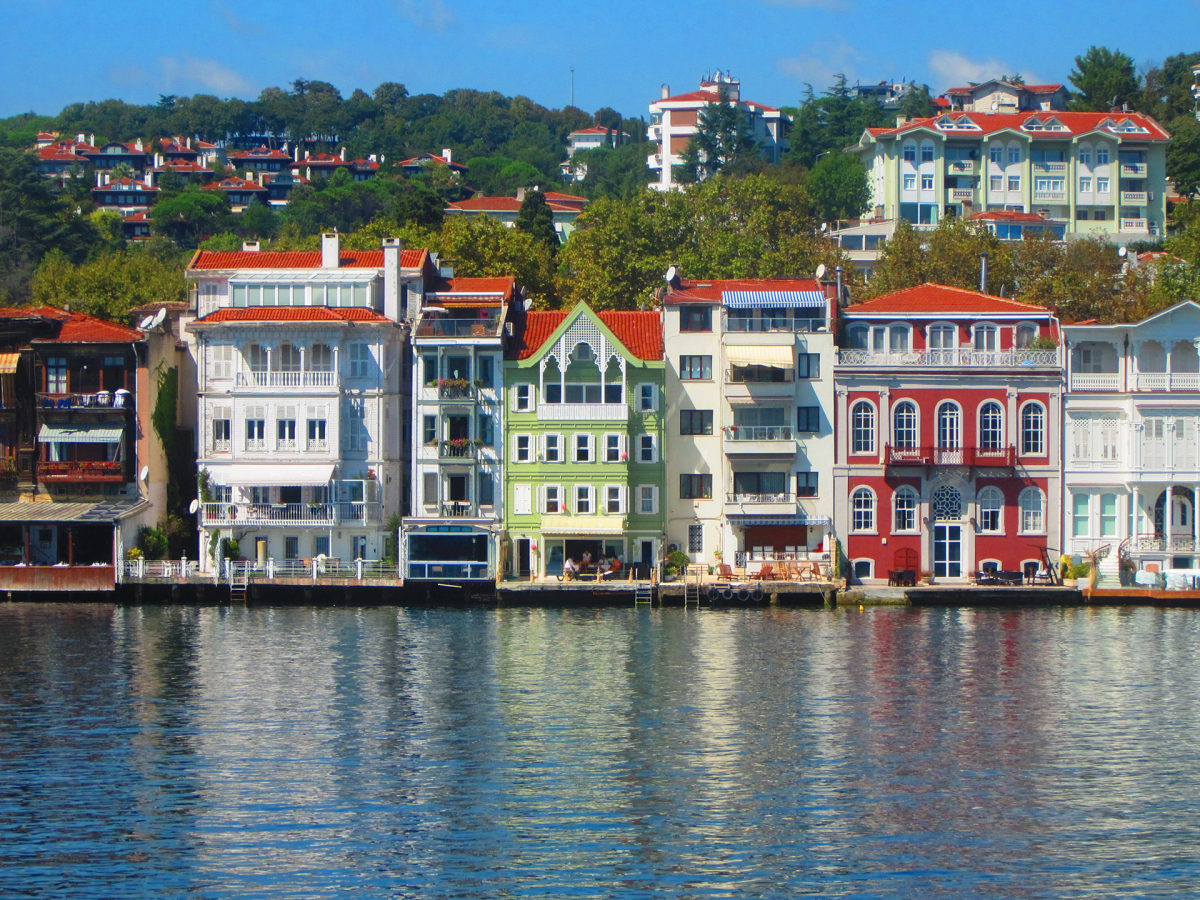
Yalı prices along the Bosphorus waterfront begin at approximately USD 6 million. The upper segment spans USD 40 to 100 million, with select properties exceeding even that threshold. Denominated in Turkish lira, prices begin at TRY 150 million and extend into the billions.
What makes these figures meaningful is not prestige alone — it is the structurally constrained nature of supply.
No new zoning is being opened along the Bosphorus. No new yalıs can be built. Heritage protection statuses make this a permanent reality. While supply is effectively frozen, demand grows more global with each passing year.
Research indicates that approximately 100 Bosphorus yalıs have passed into the hands of foreign buyers — primarily from Gulf states — who regard these assets not merely as residences, but as globally credible stores of value.
Benchmarked against equivalent waterfront locations in Geneva or Monaco, the Bosphorus still offers an exceptional balance of prestige and price by world standards. Along the hillsides of Bebek and Ortaköy, finding a vacant plot is all but impossible.
The Bosphorus is not a depleting coastline. It is a rare asset — one that cannot be manufactured, replicated, or expanded — and one whose value will only deepen with time.
Early Signals of Transformation: Where Is the Next Story Being Written?
Istanbul's greatest investment opportunities have never been found where everyone is already looking. They emerge where transformation is still underway.
Kağıthane is the clearest example. A district that until recently was defined by ageing industrial fabric, it has reached an average of USD 2,000/m² through metro connectivity, institutional office developments, and urban renewal initiatives. Those who identified this transformation early were well rewarded by the market.
Similar signals are now resonating in other locations.
The Zeytinburnu–Bakırköy coastal corridor is emerging as a zone where former industrial stock is being converted into a new premium living axis. Arnavutköy, meanwhile, is asserting itself as a future business and residential hub on the strength of its proximity to the airport and ongoing infrastructure investment.
These areas attract relatively little attention today. But those who know Istanbul's story well understand that low visibility can sometimes be the most powerful signal of all — much like Zekeriyaköy and Göktürk, where land that once traded at modest figures has been transformed into some of the city's most prestigious addresses.
Which Market Are You In?
If 2026's Istanbul property market were to be captured in a single word, that word would not be stagnation. It would be divergence.
Two distinct markets coexist within the same city — sometimes within the same neighbourhood, at times on the same street:
The volume market: Driven by broad demand and a wide buyer base; historically strong in transaction count but decelerating in 2026.
The quality market: Driven by selective demand, cash equity, and a long-term perspective; one in which prices continue to rise while transaction volumes are more measured — but considerably deeper.
Both markets are real. Both follow their own logic. But their rules, their investment theses, and the right questions to ask of each are entirely different.
Those who ask the right question are already standing in the right market.
Istanbul has always spoken through its silences. 2026 is no exception.
Sources
TÜİK (Turkish Statistical Institute) — Residential sales statistics, 2025 annual data TCMB (Central Bank of the Republic of Turkey) — House Price Index, 2025–2026 EVA Real Estate Appraisal — Istanbul luxury segment field data, 2026 Endeksa — District-level payback periods and price-per-square-metre data, 2025–2026 Global Property Guide — Istanbul average residential price benchmarks, 2025 Q2
This report is intended for informational purposes only and does not constitute investment advice.
Sound decisions begin with sound guidance. With over 20 years of sector expertise and a team of nearly 40 specialist consultants, we evaluate Istanbul's property market not through numbers alone, but through the depth of context those numbers require. To identify the opportunity most aligned with your individual needs, objectives, and expectations, we invite you to connect with our team.