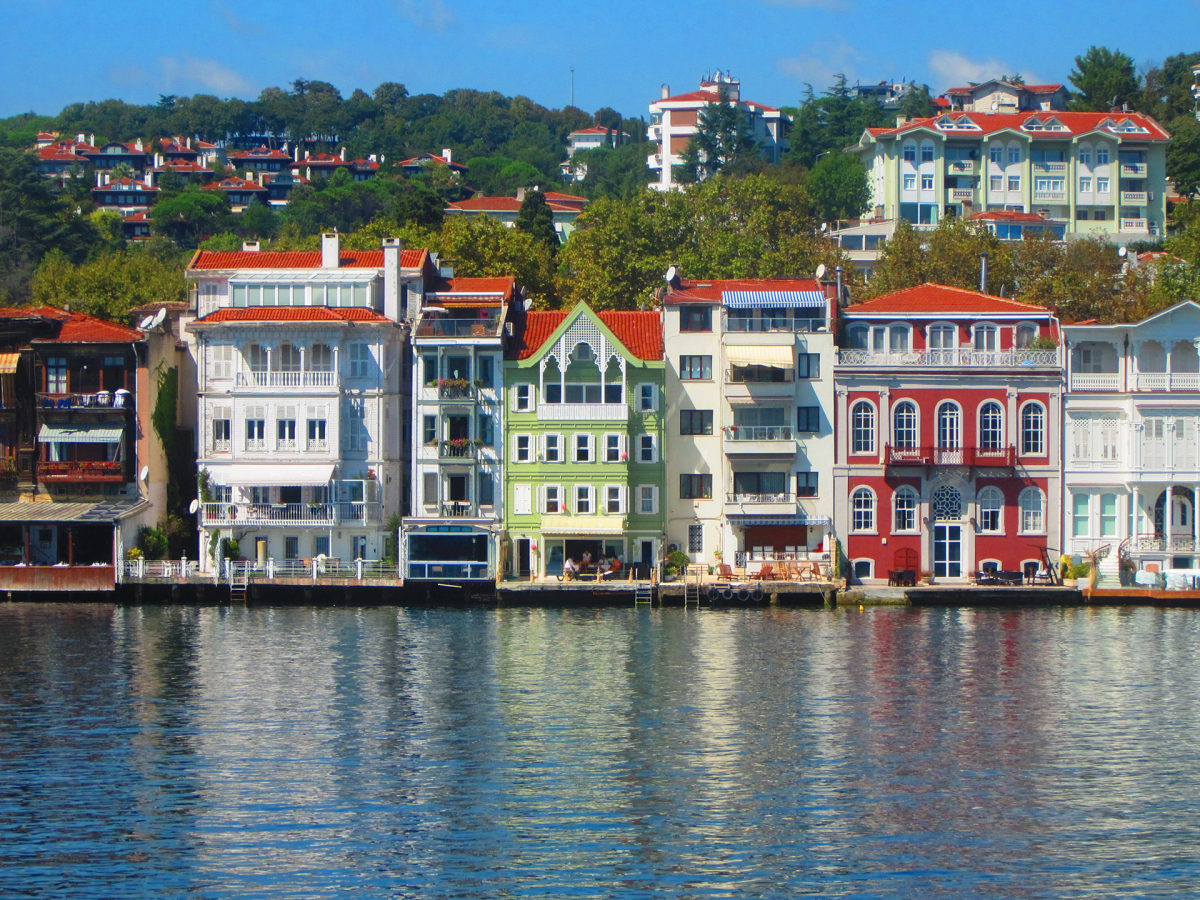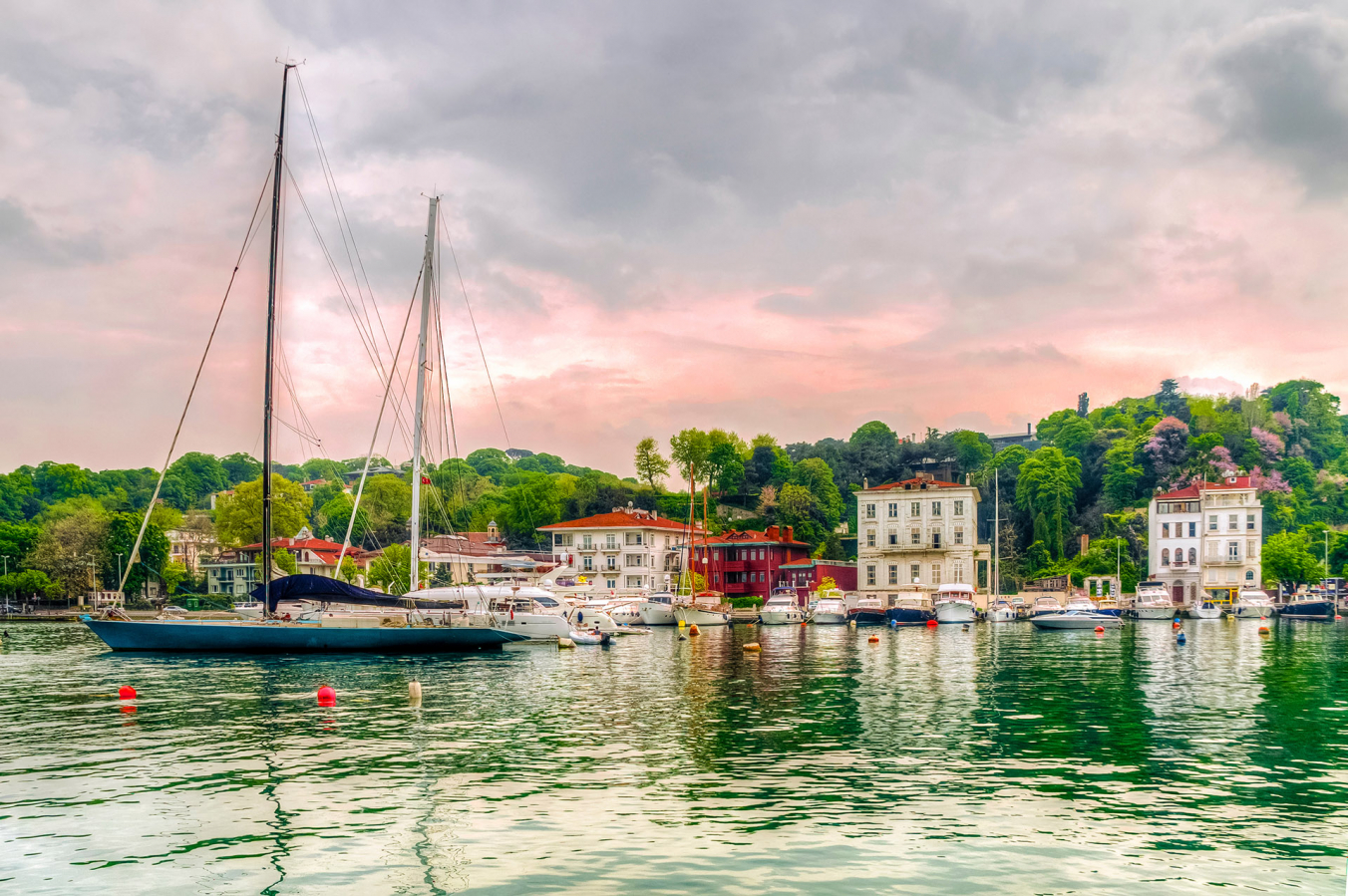

The Bosphorus is not merely a geographical waterway separating the continents of Asia and Europe, or channeling the turbulent waters of the Black Sea into the serene expanse of the Sea of Marmara. It is an immense, living, and uninterrupted stage that narrates the cultural, economic, and political transformations of a vast empire, the mindset of the elites who governed it, and humanity’s sophisticated relationship with nature, all through the monumental architectural structures rising along the Bosphorus. On this historical stage, the Bosphorus waterside mansions emerge as the most tangible expressions of the Ottoman elite’s organic bond with the water a desire to display power and privacy simultaneously, with unparalleled elegance.

Yet, along the shores of Yeniköy, the Sait Halim Pasha Bosphorus Waterside Mansion gazes at the deep waters of the Bosphorus with a solemn, almost proud dignity, embodying far more than a conventional summer residence or an ordinary coastal structure. This monumental edifice tells a profoundly layered and mysterious story: concealed within its wooden frameworks, marble columns, and traditional brick-and-timber walls lies the breathtaking narrative of an empire in decline, shadowy diplomatic maneuvers, generations of cultural estrangement, and, ultimately, the transformation of a historical legacy into a contemporary cultural artifact.

Why the Sait Halim Pasha Bosphorus Waterside Mansion is Important?
What makes the Sait Halim Pasha Bosphorus Waterside Mansion exceptional, unique, and captivating in the Bosphorus architectural landscape is not just its large size, the wide grounds, or the high-quality materials. This building turns the great dilemma that challenged Ottoman thinkers, officials, and rulers in the second half of the 19th century into a physical reality. From the outside, especially when seen from the water, it shows a rational, symmetrical, disciplined, and Western appearance. But once someone steps inside, the visitor enters a completely different world, full of mystery, rich decoration, emotion, and the elaborate patterns of Eastern design. This striking contrast in space captures an empire that outwardly looked to the West while its roots, beliefs, and spirit remained firmly in the East, reflecting the mental tensions and divided mindset after the Tanzimat reforms.
The mansion is important not only as a grand waterfront building. Within its walls, decisions that shaped the outcome of World War I and affected millions of people were made. In its deer-skin rooms, the final moments of an empire were discussed. During the early years of the Republic, this structure witnessed sharp social changes and shifts in ideas: from a place for thinkers to gather, to a casino accessible only to foreign visitors, then to a neglected state guesthouse damaged by fire, and finally to a modern event space for high-end gatherings. In this way, it records the hidden history of governments across time.
We present the Bosphorus’ most iconic and unique building from A to Z—not just as a structure, but as a continuous mirror reflecting memory, political changes, elite activity, and real estate dynamics.

The Story and History of the Sait Halim Pasha Bosphorus Waterside Mansion (Aslanlı Mansion)
The land, foundations, and structure of the Sait Halim Pasha Bosphorus Waterside Mansion have a complex history of ownership, expropriation, and changing functions that extends from the final century of the Ottoman Empire to modern Turkey. While historical sources provide conflicting accounts regarding the mansion’s initial construction, its craftsmen, and renovation processes, academic surveys, period maps, parliamentary records, and archival documents allow a clear chronological tracing of its evolution. The strategic location of Yeniköy on the Bosphorus has made this plot a point of interest for power holders throughout history.
The roots of development on this site reach back to the 1820s. At that time, the land hosted a grand wooden waterside mansion known as the “Düzoğullar House,” belonging to the Düzoğullar (Düzyan) family, an Armenian lineage that controlled the Ottoman mint for six generations and dominated the financial world. Holding the means of currency production, this mansion represented the financial power of the period along the Bosphorus. The presence of such a property in Yeniköy confirms that even in the early 19th century, the neighborhood functioned as a center of wealth and influence.
By the mid-19th century, amid financial crises and political unrest, ownership passed to Logothete Nicholaos Aristarhis, one of the most powerful representatives of the Greek elite, a member of the Ottoman Ayan Assembly, and a prominent banker. Finding the remaining structure from the Düzoğullar inadequate for European standards and their diplomatic standing, the Aristarhis family demolished the old mansion and constructed an entirely new waterside mansion around 1863. This building functioned as a banker’s residence, hosting European financial telegrams, trade discussions, Levantine circles, and foreign diplomats, with architecture reflecting the imperial style. The heart of financial capital along the Bosphorus beat within these walls.

The decisive turning point for the mansion came in 1876, when Prince Mehmet Abdülhalim Pasha of the Khedivial family of Egypt, heir to the vast fortune of Mehmet Ali Pasha, purchased the property from the Aristarhis family or another banker named Vlahos. Historical records differ regarding the mansion’s current form. Some accounts suggest the Aristarhis construction formed the core of today’s structure. However, architectural history sources confirm that Abdülhalim Pasha, seeking greater grandeur than the existing building, commissioned the famous architect Petraki Adamandidis to rebuild or extensively renovate the mansion. Adamandidis transformed the property into the monumental waterside mansion seen today, redefining its scale and spatial hierarchy. After Abdülhalim Pasha’s death in 1890, the estate passed to his nine children.
One of these heirs, Said Halim Pasha, who would later rise to the position of Grand Vizier, acquired the shares of his eight siblings in 1894, becoming the sole owner of the mansion. During his ownership, the Armenian master craftsman Papa Kalfa carried out aesthetic and functional improvements, including the monumental staircase in the central hall, the glazed lantern providing natural light to the roof, and additional balconies on the water façade, elevating the mansion’s spatial hierarchy.
Following Said Halim Pasha’s assassination in Rome in 1921 by an Armenian revolutionary while in exile, the mansion passed to his heirs. During this period, the mansion’s former political prominence faded, and it was leased primarily to high-ranking Middle Eastern and Arab guests. At one point, King Faisal of Saudi Arabia resided in the mansion, enjoying Istanbul under this historic roof.

The table below summarizes the phases of ownership, architectural interventions, and use of the property from its earliest settlement to the present day...
| Period / Year | Ownership / Responsible Institution | Architectural Intervention, Function, and Spatial Status |
|---|---|---|
| 1820s | Düzoğullar (Düzyan) Family | Original traditional wooden mansion belonging to Armenian mint administrators. Functioned as a financial center. |
| 1863 | Logothete Nicholaos Aristarhis | Complete demolition of the old structure and construction of a new mansion by the Greek banker. Functioned as a residence focused on finance and diplomacy, built in imperial style. |
| 1876 – 1890 | Prince Mehmet Abdülhalim Pasha | Ownership transferred to the Khedivial family. Architect Petraki Adamandidis rebuilt the mansion on a grand “waterside palace” scale. |
| 1894 – 1921 | Said Halim Pasha | Acquired the shares of his siblings, becoming sole owner. Additions and renovations by master craftsman Papa Kalfa. Central hall staircase, roof lantern, and water façade balconies installed. Served as a political and cultural headquarters, including during the 1914 Alliance Treaty. |
| 1921 – 1968 | Heirs of Said Halim Pasha | Following the Pasha’s death, managed by heirs and leased to foreign dignitaries (e.g., King Faisal). Gradual loss of political function, retained as an elite residence. |
| 1968 – 1980 | Tourism Bank / Hilton Management | Ownership transferred to the state. Functioned as a casino and nightclub accessible only to foreign passport holders. Original structure suffered significant damage. |
| 1980 – 1984 | TAÇ Foundation | Restoration initiated to repair casino damage. Millions spent on the reconstruction of the pier, roof, and harem garden. |
| 1989 – 1995 | Development Bank of Turkey / Prime Ministry | Institutional transfer. Served as a summer residence for the Prime Ministry and official guesthouse for state receptions. Partial musealization efforts. |
| 12 November 1995 | Prime Ministry of Turkey | Large fire starting from the roof destroyed the upper floor and rare furnishings during ongoing restoration and office preparation. |
| 1995 – 2002 | Prime Ministry / Emek Construction | Comprehensive reconstruction under Prof. Dr. Doğan Kuban’s consultancy and architect Acar Avunduk, faithful to the original 1890s design. |
| 2004 – Present | Göçtur Tourism / Private Management | Leased from National Real Estate for 49 years. Currently used as a luxury venue for weddings, events, product launches, meetings, and other high-end gatherings. |
The Architectural Duality of Sait Halim Pasha Waterside Mansion: Rationally Western Outside, Passionately Eastern Inside
Sait Halim Pasha Waterside Mansion stands as one of the rare and tangible expressions of 19th-century Ottoman civil architecture’s stylistic struggles, compelled Westernization reflexes, and profound cultural identity quest. It departs decisively from the delicate, introspective typology of a typical Bosphorus wooden mansion. Its volume, massing, ceiling heights, and façade composition reach the scale of a European palace, asserting a commanding presence over the Bosphorus.
The mansion was designed by the eminent architect Petraki Adamandidis, also recorded in historical documents as “Petraki Kalfa” or “Petros Adamandidis.”
The Adamandidis family shaped Istanbul’s Westernizing silhouette through monumental structures such as the Luvr Apartment (Baylan) in Beyoğlu, Taksim Palas, and Ankara Han on Bankalar Street, leaving a lasting mark on neoclassical architecture well into the early Republican period. Educated at the École des Beaux-Arts in Paris and trained under the renowned Levantine architect Alexandre Vallaury, Adamandidis masterfully applied the eclectic architectural language favored by his mentor to this mansion. By merging the boundless wealth and opulent sensibilities of the Khedivial family—descendants of Mehmet Ali Pasha of Egypt—with rational, rule-based Western forms, Adamandidis introduced a hybrid, unprecedented expression into Bosphorus architecture.
The mansion’s most striking architectural argument lies in the sharp, almost jarring contrast between its exterior and interior. Traditional Bosphorus waterside mansions typically feature daring projections toward the water, expansive eaves, wooden struts, and bay windows; none of these appear on this mansion’s exterior. The façade is clean-lined, predominantly neoclassical and imperial, austere yet dignified, with rigid symmetry. Viewed from the Bosphorus, the pier, or Köybaşı Street, the mansion resembles a rational 19th-century European civic building, a Swiss chalet, or a disciplined Italian villa. Its slight setback from the water, with a monumental space between the mansion and the pier, reinforces its authoritative stance.

Yet, stepping inside through the wooden doors behind the “Western” façade transports the visitor into an entirely different universe—where logic yields to emotion and the space transforms into a lavish, gilded, Orientalist Eastern tale. The interior decoration exhibits heavy Arabesque elements, eclectic assemblages, carved ceilings, and motifs influenced by Egyptian and Arab design, all executed with meticulous craftsmanship. While gilded wood carvings were partially replaced by grand crystal mirrors, bronze appliqués, and cubic, solid mahogany furniture imported from France, the interior design language retained maximal opulence.
Reflecting the intellectual struggles of enlightened Ottoman statesmen, particularly Said Halim Pasha, the mansion presents a rational, modern, systematic, and rule-based face to the outside world. Within, however, in the family’s private chambers, it remains deeply rooted in Islamic mysticism, Eastern traditions, and the grandeur associated with the Egyptian Khedivial heritage. The mansion embodies an aesthetic and architectural solution to the identity crisis experienced by an empire straddling East and West.
The mansion is organized according to the “orta sofa” system, a grand-scale version of the traditional Turkish house plan. Rooms are arranged around the central hall, a double-height space, with galleries and balustrades continuing an ancient palace tradition. Unlike most Bosphorus mansions where the Harem (family quarters) and Selamlık (male or reception spaces) are separate structures or under distinct roofs, here both principal sections are united under a single, massive roof. Facing the water, the northern (right) wing houses the private Harem quarters, while the southern (left) wing contains the Selamlık, where state affairs, guest receptions, and grand council meetings occurred. These contrasting zones are connected through wooden and glass partitions that maintain spatial continuity and light permeability while preserving absolute privacy.

Spatial Composition, Mansion Life, and Disconnection from Nature
Sait Halim Pasha Waterside Mansion represents the pinnacle of "yalı life," not merely as a luxurious enclosed residence, but as a spatial dialogue with nature, the Bosphorus waters, and the once-verdant forest that framed its rear. Its scale far surpasses that of a standard summer residence. The mansion’s footprint covers approximately 1,250 square meters, while the total enclosed wooden area across its two main floors, excluding the marble basement, reaches 2,500 square meters. This monumental size establishes it as one of the largest mansions on the Bosphorus—a true "waterside palace" in the words of architects.
The waterside pier, built directly on the Bosphorus, functioned not only as a docking point for the Pasha’s boats, but as a formidable display of status for visiting diplomats and foreign missions. From the pier, visitors accessed the Selamlık and Harem sections through separate monumental entrances. The two marble lion statues guarding the Selamlık entrance, which gave the mansion its popular name “Lion Mansion,” symbolize strength, permanence, and security. Each room within the mansion was meticulously curated, with rare objects and cultural references creating a series of micro-museums.
For example, the so-called “Venetian Room” is adorned with decorative pieces, gilded mirrors, and furniture imported directly from Venice, evoking an Italian fantasy. The “Japanese Room” houses diplomatic gifts from the Japanese Empire, creating a corner of Eastern motifs and international respect. The “Golden Room,” named for its solid gold-plated ceiling and furniture, reflects the staggering wealth of the era. The basement, constructed from six massive marble blocks, provides natural ventilation and humidity control, countering Istanbul’s humid climate. One of the mansion’s most authentic features, the original glass-hued hamam, creates a poetic spatial interplay between water and light.
Yet, the original life experience of Sait Halim Pasha Mansion endured its greatest spatial and psychological trauma during Istanbul’s mid-20th-century urban upheavals. Traditional yalı culture, rooted in the triad of sea, wooden residence, and rear garden/forest, was systematically disrupted. In the 1950s, especially with the expropriations under Prime Minister Adnan Menderes, the expansion of the coastal road (today’s Köybaşı Street) for motor traffic led to the demolition of the elegant bridges connecting the mansion to its rear forest. As a result, the mansion was severed from the landscape it had relied on for centuries, left isolated between the city and the Bosphorus.

Said Halim Pasha Mansion: The Shadow Center of Diplomacy and Culture
Prince Said Halim Pasha, raised as a wealthy heir of the Egyptian Khedivial family, was a multifaceted intellectual, diplomat, and served as the Ottoman Grand Vizier between 1913 and 1917. He transformed his mansion from a mere summer residence into one of the most significant political, diplomatic, and cultural centers of the period. On August 2, 1914, the Ottoman-German Alliance Treaty was signed here, leading to the Ottoman Empire’s entry into World War I and setting in motion events that affected millions of lives. Prominent figures of the Committee of Union and Progress used this mansion as a strategic meeting place, functioning almost like a “shadow cabinet.”
Beyond its political significance, the mansion became a hub for literary, poetic, and philosophical gatherings. Figures such as Mehmet Akif Ersoy, Neyzen Tevfik, and İbnülemin Mahmud Kemal attended long, late-night discussions under Pasha’s patronage. Within this environment, Said Halim Pasha composed works reflecting on the East-West synthesis and ideological transformations. The mansion thus served as an intellectual command center, acting almost as Turkey’s “civil academy.”

Whispers Seeping Through the Walls: Legends and Secrets
Where official documents, architectural surveys, land registry records, and parliamentary transcripts end, the whispers that seep into the walls of historic buildings—and the legends circulating among the public—begin. Over its more than 150-year history, the Said Halim Pasha Mansion has witnessed numerous dramatic events, alleged assassinations, claims of plundering, and unsolved mysteries. The legends that have grown around it continue to give the mansion a dark, powerful aura even today. It should be noted that many elements under this heading are unverified historical accounts, conspiracy theories, and political speculations.
Legend: The 1995 Fire and Suspicions of Organized Looting Tied to the State
The most significant, traumatic, and debated recent event in the mansion’s history was the terrible fire that broke out on November 12, 1995, around noon. At the time, the mansion was undergoing restoration to serve as the Prime Ministry’s official guesthouse under the Tansu Çiller government. Fire brigade reports recorded that the fire started in the attic and rapidly engulfed the wooden structure under the influence of a strong southwesterly wind, pointing to possible electrical contact or a dropped cigarette as potential causes.
However, the most chilling aspect of the incident stemmed not from the flames themselves but from events alleged to have occurred months earlier. In January 1995, Istanbul MP Halit Dumankaya delivered a fiery speech in the Turkish Grand National Assembly, claiming—and having it officially recorded—that “the priceless items inside the mansion are being systematically looted and that the mansion would soon be deliberately set on fire to cover up this massive theft.” Exactly eleven months after Dumankaya’s ominous warning, the mansion’s roof did indeed catch fire, instantly transforming what might have been a simple accident into a headline-grabbing story of “state-involved looting and cover-up.”

After the fire, a comparison between the 1986 inventory of the Tourism Bank and the 2002 inventory of the Prime Ministry revealed a shocking reality: of the priceless 44 enormous crystal chandeliers, only 15 remained; hundreds of inlaid and gilded 15th- and 16th-century Louis-style antique furniture pieces, candelabras, and paintings had vanished. Of the 32 massive antique collections that had once filled all 24 rooms of the mansion, only enough remained to furnish a single room. Surviving items were reportedly stored in the Yıldız Palace Museum’s depots. Despite parliamentary motions calling for investigation, including the Directorate of Turban, the matter has never been fully clarified.
Legend: The Miraculously Preserved “Enchanted” Painting
One of the mansion’s most legendary artifacts is the “Desert Hunt” painting by French Orientalist Felix-Auguste Clement, created in 1865 in Egypt and placed at the entrance of the Selamlık wing. Measuring 390 x 700 cm (approximately 27 square meters), it is the largest Orientalist painting in Turkey. The greatest legend surrounding it is that it is “enchanted” or divinely protected. Integrated into the wall due to its colossal size, it remained in place for 154 years without being removed, surviving thick tobacco smoke during the mansion’s casino period, the catastrophic 1995 fire, the collapse of the roof, and even the threat of a ship accident in 2003—emerging without a single burn, soot, or water stain. Locals have long attributed a mysterious power to the painting. It was finally moved from the mansion and installed in the National Palaces Painting Museum in 2019.

Legend: The Two Lions of the “Lion Mansion”
The origin of the massive marble lion statues at the waterfront, which gave the mansion the nickname “Aslanlı Yalı” (Lion Mansion), is also the subject of whispers. Beyond their decorative function, it is claimed that the lions were diplomatic gifts and symbols of inter-state loyalty. According to legends passed down by former residents of Yeniköy, the female lion was sent from Italy as a special gift when Said Halim Pasha donned his sword, while the male lion was delivered from the German Empire during Pasha’s tenure as Grand Vizier, possibly in commemoration of the Ottoman-German alliance.
With over 20 years of experience in the sector, Space Istanbul knows the prestigious waterfront residences and luxury properties along the Bosphorus inside and out. For more than 40 months, we have been providing consultancy to upper-segment investors, building relationships based on trust. For every project, we analyze not only the square footage and views but also the lifestyle, investment value, and cultural context. Through our digital content, we make the history, character, and exclusivity of every mansion and residence along the Bosphorus visible. From waterfront mansions to rooftop duplexes, modern residences to historic buildings, every location can be explored from both an investment and prestige perspective through Space Istanbul’s expert lens.
#spaceistanbul #lionmansion #saidhalimpaşamansion #saidhalimpaşamansionstory #whereissaidhalimpaşamansion #whoownedsaidhalimpaşamansion