
Imagine visiting one of the most expensive homes in the world. You step through the door — no Venetian chandelier, no gold-plated fixtures, no ceiling fresco to steal your breath. What greets you is a plain wall. What stops you is the system running behind it: the one that already knew who you were before you ever reached the door.
This is where ultra-luxury real estate stands in 2026. Beauty has been demoted to a secondary luxury. Control is the primary one.
Those who haven't grasped this shift are still talking about views, marble bathrooms and signature designers. The real players in the market, however, have long been speaking an entirely different language.

The Numbers Don't Lie: Where Is the Market Heading?
Before abstract analysis, let's look at the concrete picture.
- 45%. As of late 2025, approximately 45% of global luxury home listings now lead with privacy or security features as their primary selling point. In 2024, that figure stood at 38%. Seven percentage points — in one year — in a single market segment.
- $100,000 — $1,500,000. The cost of security infrastructure alone added to an ultra-luxury property. Biometric access systems, laser-assisted perimeter defense and underground bunker integration. Separate from the structure itself.
- 50%+. According to LinkedIn co-founder Reid Hoffman, more than half of tech billionaires own what he calls "apocalypse insurance" — an alternative property held in reserve. New Zealand is the most popular destination among this particular club.
- $300,000,000. The estimated cost of the self-contained compound Mark Zuckerberg is building on the Hawaiian island of Kauai. Underground shelter, independent energy systems and its own food production capacity — a fully autonomous ecosystem.
- These figures are not the footprint of a trend. They are the signature of a fundamental shift in mindset.
Two Worlds of Wealth, Two Irreconcilable Universes
To understand the ultra-luxury real estate landscape in 2026, one question must come first: Who is buying, who is selling, and who is deciding what holds value?
Old Money: Identity Carved in Stone
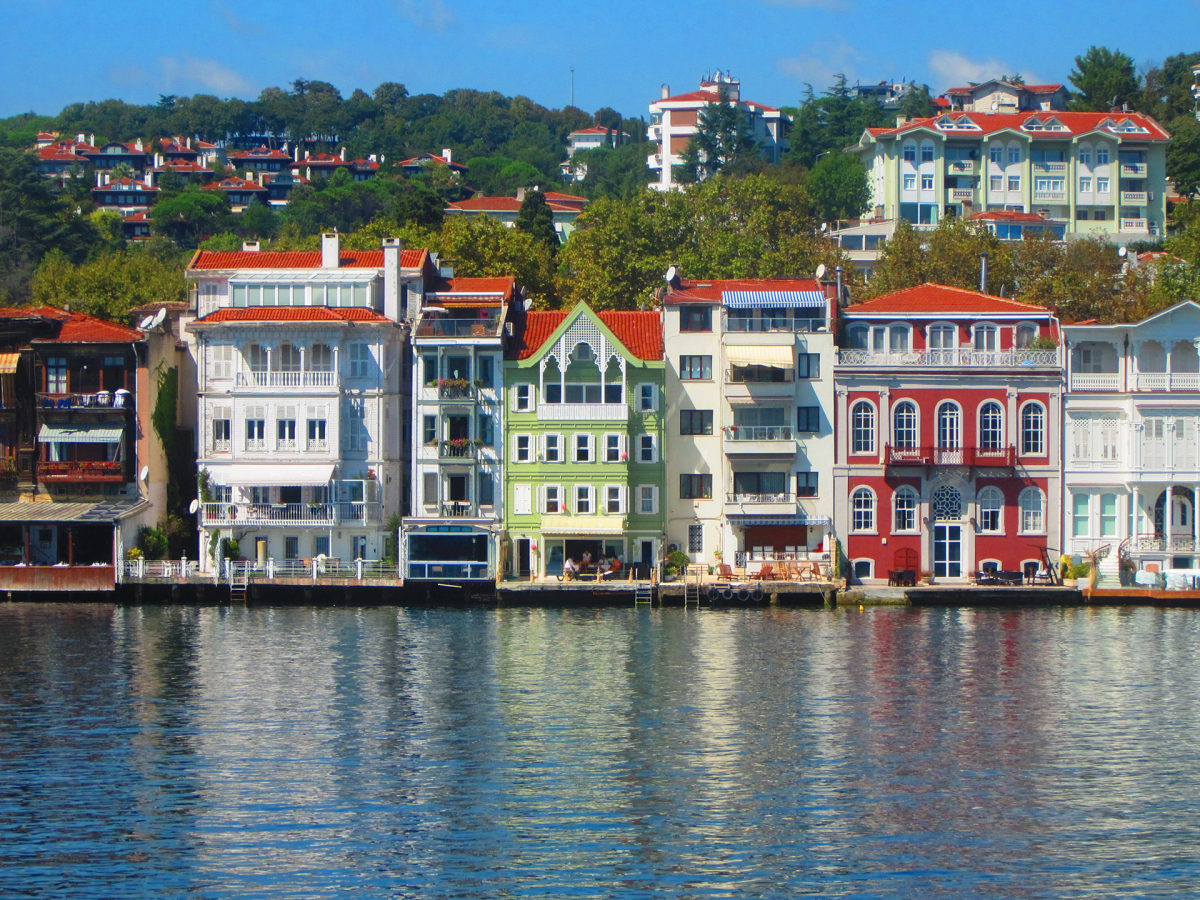
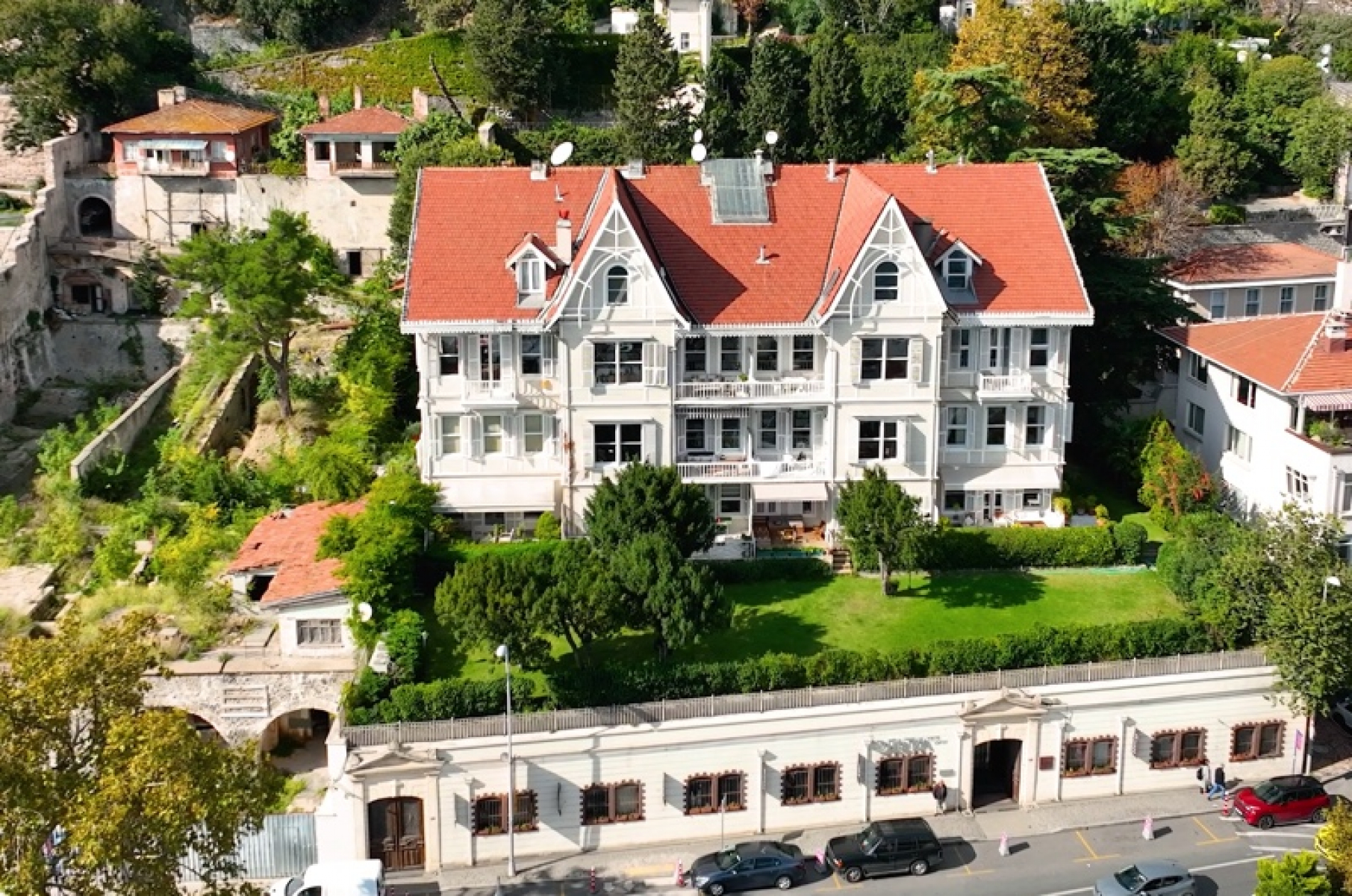
For old wealth, a property is not an asset class — it is a form of identification. The cracked timber of a Bosphorus waterfront mansion, the yellowed fresco in a centuries-old Parisian apartment, the flaking plaster of an English country estate: none of these are flaws. They are patina. The marks left by time and inheritance.
The architectural language of this world produces legibility. The building arrives before its owner does — quietly communicating who they are, where they come from, and to which circle they belong. Here, prestige is built through visibility. The place your property holds in collective memory determines the place you hold in it.
The valuation logic of old wealth follows accordingly: authenticity, historic preservation, craftsmanship and cultural continuity. "How old is this building?" matters far more than "How large is it?"
New Money: The Logic of Engineering
For the billionaires of the technology age, a property answers an entirely different question: "How well does this system perform?"
For this class, wealth is not the product of accumulated inheritance passed down through generations — it is the product of speed, algorithm and digital disruption. They grew up in front of screens. They belong to the first generation to learn, viscerally, that everything can be optimised, every system improved, every risk calculated.
Naturally, they see the home as a system too.
A home is not a heritage object to be preserved — it is a platform: continuously updated, patched, monitored for performance. It ceases to be a vehicle for architectural expression and becomes an engineering problem to be solved. Within this framework, the defining question is not "How does it look?" but rather: "How many hours of energy reserves does it hold? How resilient is it against a cyberattack? If external connections are severed, how many days can it operate independently?"
The tension between these two worlds is the single most defining dynamic in ultra-luxury real estate today
Quiet Luxury: A Collapsing Aesthetic
The quiet luxury trend that dominated global design discourse between 2022 and 2024 was, in retrospect, the aesthetic of a transitional moment.
Logo-free cashmere, invisible-hinge flush doors, beige-grey-cream palettes, marble and solid wood. The philosophy of "less, but better." All of it simultaneously satisfied old wealth's contempt for ostentation and new wealth's anxiety about becoming a target.
So what changed?
- The geopolitical ground shifted. Regional conflicts, energy crises and economic volatility gave rise to concrete threats that no aesthetic could address. A beautiful home cannot hold its value in an earthquake zone. An elegant design cannot serve as a barrier against a cyberattack.
- Digital surveillance became a genuine danger. Satellite imagery, AI-powered facial recognition systems, third-party tracking of location data — in this environment, invisibility ceased to be a preference and became an operational security requirement.
- The climate crisis turned physical. Floods, wildfires and infrastructure collapse elevated a building's structural resilience to a primary valuation criterion. The refined natural timber of quiet luxury swells in floodwater.
Quiet luxury represented a remarkably elegant aesthetic. But it was defenceless against the threats of the new era. The market recognised the gap — and moved swiftly.
Technological Brutalism: Architecture's New Sovereign
The name of the new paradigm is contained in two words: Technological Brutalism.
Recall the brutalism of the twentieth century: raw concrete, structures where function obliterated form, the unmediated expression of power and mass. The architectural embodiment of Le Corbusier's dictum that "a house is a machine for living in."
Today's technological brutalism draws from that same spirit — but quieter, more concealed, and considerably more expensive.
What It Reveals. What It Withholds.
From the outside, a technological brutalist structure is designed to deceive. There is no commanding entrance. No facade that dominates its surroundings. Instead, the building dissolves into the topography — embedded in a hillside, buried in a slope, absorbed into forest cover. Neutral. Silent.
This is a deliberate act of erasure. The goal is not simply to avoid attention — it is to resist detection. To be unreadable from satellite imagery. To appear on no map. To be indecipherable from the street.
But What Lies Beneath?
Behind that austere shell, the infrastructure of an operations centre runs without interruption:
Energy sovereignty: Off-grid power generation supported by solar, wind and geothermal systems. When external energy supply is cut, the structure continues functioning — without noticing.
Cyber fortress: Militarily segmented network infrastructure, zero-trust architecture and physical network isolation. Connectivity to the internet is a choice, not a dependency.
Biometric barrier: Facial recognition, retinal scanning, behavioural analysis and multi-layered identity verification. By the time you reach the door, the system already knows who you are. You either enter — or you never existed.
Life support system: Closed-loop water purification, vertical farming for food production, independent ventilation and air filtration. Full autonomous living capacity against chemical, biological or radiological threats.
The subterranean layer: Underground living spaces secured by blast-resistant doors. No longer merely a panic room — a fully realised underground residence.
Here, luxury belongs not to those who wish to behold it, but to those who understand how it works. And this marks the first moment in history in which luxury has been hidden entirely from view.
Billionaire Bunkers: Conspiracy Theory or Market Reality?
At this point, many readers are thinking: "This is overblown. This is the habit of a handful of paranoid billionaires."
Let's look at the data.
Mark Zuckerberg is spending $300 million on a self-contained compound under construction across approximately 567 acres on the Hawaiian island of Kauai. What the planning documents reveal: a 4,500-square-metre underground living space, blast-resistant doors, independent energy production and a dedicated water system. Zuckerberg described it as "a little shelter — basically a basement." When local outlet Hawaii News Now obtained and reviewed the original construction plans, an entirely different picture emerged.
Bill Gates, Peter Thiel and Elon Musk have also been reported to own — or to be actively constructing — properties with underground systems. Reid Hoffman summarised the landscape with characteristic bluntness: "Saying you've bought a house in New Zealand is basically a wink among a certain crowd."
The pattern holds at the market level too:
Bill Rigdon, founder of security firm Panic Room Builders, notes that once a property's value crosses $100 million, demand invariably shifts toward full-scale underground complexes. Al Corbi, president of security company SAFE, describes the structures he now builds as underground residences outfitted with bowling alleys, home cinemas and wine cellars. Some compounds include private Formula 1 circuits — fully underground, capable of sustaining speeds exceeding 100 kilometres per hour.
This is not a conspiracy theory. This is a data-supported transformation playing out at the very top of the market.
The Economy of Invisibility: How the New Prestige Operates
Consider this carefully.
Throughout centuries of human history, prestige was constructed through visibility. Grand facades. Sweeping gardens. Social hierarchies enacted through guest lists. Think of Versailles — its hundreds of windows were not merely a source of light. They were a declaration: look, I am here.
Today, a portion of the world's wealthiest individuals are doing the exact opposite. They are reshaping the land itself to avoid appearing on satellite maps. They prefer that even their neighbours remain unaware of their identity. They commission structures in which half the security staff cannot identify the other half.
Once, "how large" was prestige. Today, "how invisible" is.
This shift in mindset is not accidental. Millennial and Gen Z billionaires are the first generation to understand, at a cellular level, that every photograph is a data point, every location is traceable, and a digital footprint can translate directly into physical vulnerability. For this reason, they do not regard visibility as a status signal — they regard it as a risk to be managed.
The conclusion is unambiguous: inaccessibility is the new status symbol.
The home is no longer a social stage on which carefully chosen guests are received. It is an ecosystem — algorithmically controlled, completely sealed from the chaos of the outside world.
"How Controllable Can It Be?"
Step back. Look at the full arc.
Throughout architectural history, the most expensive structures built by humanity have always been the most explicit expressions of social power. The pyramids reached for the sky. Cathedrals challenged the divine. Versailles was constructed to make power visible. The skyscrapers of the twentieth century raced the heavens with economic supremacy.
In 2026, a portion of the world's wealthiest individuals are doing precisely the opposite: they are hiding what they build.
This is not merely a security preference. It is a fundamental change in worldview. Visibility no longer generates power — it generates vulnerability. Scale no longer signals prestige — it signals exposure. Aesthetics itself has become a risk factor.
Ultra-luxury real estate in 2026 answers only one of two possible questions:
"How beautiful can a home be?"
"How controllable can a home be?"
This is where the luxury of the new era begins: unobtrusive, silent, invisible — yet absolutely governable. Not a living space. A sovereign one.
And those who understand this transformation today already know where the market is heading tomorrow.
Sources: Coldwell Banker Realty (2025), Robb Report, CNN, CBC News, Wired, Hawaii News Now, Reid Hoffman interviews.
This article has been prepared for informational and analytical purposes only. It does not constitute investment advice. You are strongly encouraged to consult a licensed financial adviser before making any real estate investment decisions.